
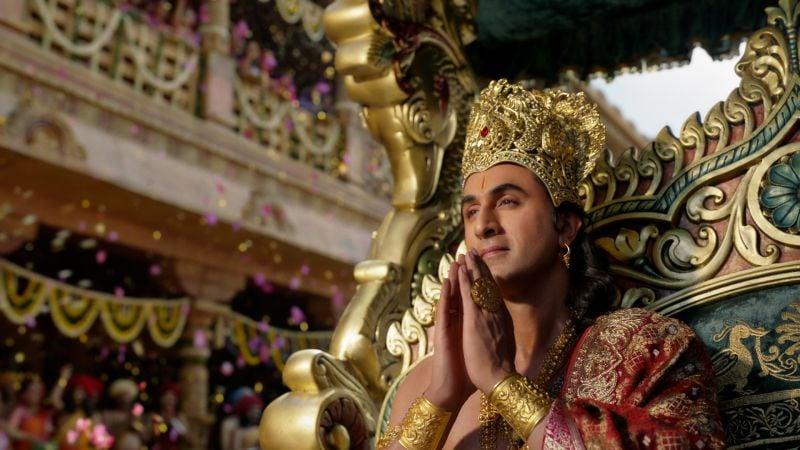
A two-part film adaptation of the Ramayana is being billed as the most expensive production in Indian cinema history. With a reported budget of roughly $500 million, the project is the personal bet of Namit Malhotra, the British-Indian founder of Prime Focus Studios and chief executive of the Oscar-winning visual effects company DNEG. He is financing the venture himself and says he is not worried about whether the first ticket sales alone will cover the cost.
"It is all my money," Malhotra said in a recent interview. "I have all the risk." For him, the project is less a conventional film release and more a long-term franchise play spanning merchandise, theme parks, and other commercial extensions. His reasoning is simple: the story of Lord Ram is so deeply embedded in Indian culture that audiences will want to return to it repeatedly.
A pan-Indian cast and a Hollywood-scale crew
Malhotra has assembled a team that deliberately crosses regional and linguistic boundaries. "Dangal" director Nitesh Tiwari is writing and directing both parts. Hindi star Ranbir Kapoor plays Rama, Kannada actor Yash plays the demon king Ravana, and Tamil and Telugu star Sai Pallavi appears as Sita. The supporting talent behind the camera includes Hans Zimmer and A. R. Rahman collaborating on the score, with DNEG handling the visual effects.
The casting choices matter beyond box office draw. By pulling leads from Bollywood, the Kannada industry, and South Indian cinema, the producers want the film to feel nationally representative rather than anchored to one language market. That strategy also reflects the reality of modern Indian ticket sales, where dubbed versions in multiple languages can multiply a film's reach.
Technology meets tradition
Part one, titled "Ramayana: Rise of a Legend," relies heavily on computer-generated imagery. The story calls for flying vehicles, armies of demon warriors, and divine creatures, so the production spent months on soundstages in Mumbai capturing performances that would later be layered with digital environments.
One of the more unusual technical choices is an English-language dub created with AI-assisted lip synchronization. Malhotra says the actors recorded their own English lines, and that the technology was used to align mouth movements with the new audio rather than to generate voices. The process took more than a year and was overseen by Brahma AI, an Indian company valued at $2 billion that sits within the DNEG Group.